The Soloist Goes Solo
The Soloist Goes Solo
AN EXCLUSIVE INTERVIEW WITH ENGLAND'S ALLAN HOLDSWORTH
By Kirk Austin
Musician’s Industry May/June 1980
"Holdsworth is the best, in my book. He's fantastic; I love him." Eddie Van Halen's sentiments (in a recent Guitar Player Magazine cover story) concerning England's Allan Holdsworth have been expressed, with similar enthusiasm, by guitarists as far-flung as jazz phenom Pat Metheny and hard rocker Pat Thrall (of the Pat Travers Band). Holdsworth's reputation is near legendary among guitar players, and his influence appears to be growing as we enter the Eighties.
The Seventies saw the development of guitar technique reach new heights in the hands of people like John McLaughlin and Al DiMeola. The emphasis was on right-hand picking, and the exponents of this style perfected the technique to one of machine-like precision. The individual articulations of each note produced an instrumental sound similar in some ways to a piano, and made for some rapid-fire playing. Towards the end of the Seventies, though, a new approach to guitar technique began taking hold. This time the emphasis was on phrasing with the left hand. Not all the notes are initiated with the pick, opening the door to other expressive nuances that give the instrument a sound that is more like a wind instrument. Pull-offs, hammer-ons, slurs, and touch technique (using both hands on the fretboard a la the Chapman Stick) are becoming more prominent in the vocabulary of contemporary guitar players.
One of the leaders of this new stylistic approach is Allan Holdsworth, probably the most sought after soloist in England. The 31-year old Holdsworth has created a distinctive, identifiable voice for himself; his style is fluid and effortless, and he manages to avoid most of the guitaristic cliches that we are all so familiar with. Although he has appeared on a number of albums and has toured the U.S. twice (with Tony Williams and with U.K.) the native of Bradford, Yorkshire is still relatively unknown to the American public in general. All of this should change soon, as he is now forming his own band, Holdsworth & Co., and is planning an album and a U.S. tour this year.
M.I.: What was your first exposure to music?
Holdsworth: I was exposed to music when I was really tiny, because my dad was a really excellent pianist. He always had lots of records around. I wanted to play the saxophone, but they could never afford to buy me one. I was hearing all this music as a child, but I didn't stay on them to buy me a saxophone, so I didn't actually get started until I was pretty old. When I was about 16 my dad bought a guitar from an uncle who used to sing and accompany himself, and I sort of started from there. I didn't even really like the guitar at first; it just happened to be there. But after I had been playing it for a while I really fell in love with it. It sort of grew on me.
M.I.: Who were some of your early influences?
Holdsworth: My dad had a lot of old records with Charlie Christian on them. So that was something that I wouldn't normally have heard, and I loved the sound he got. He got a really vibrant sound out of the guitar. I also like Jimmy Raney for the same reason. He seemed to have a nice sort of flowing feeling to his playing. There's lots of other guitar players that I've liked, but the sound put me off. Like the rubber band strings and that really sort of dead sound. I guess that put me off of a lot of music that I would've gotten into under other circumstances.
M.I.: How did you come to play violin on your Velvet Darkness album [CTI]?
Holdsworth: I'd been working in local bands around Bradford, and then I got a job in a house band that I worked at for about three years—doing dance tunes and stuff. Then I moved to London in about 1972. Around that time I picked up a violin in a pawn shop, and I just started messing around with it. I don't play it at all any more, because I need the time to work on the guitar. I keep finding things on the guitar that I need to get into, and I can't split up my time with the violin. I have an affinity for the violin; if someone had given me a violin when I was six or seven, I think that would have been it. But it's such a hard instrument that I just don't have the time to work on it.
M.I.: You've played with a lot of different people. What was your first recording experience?
Holdsworth: The first thing was on an album called Tempest with Jon Hiseman. That was really my first experience with recording. Then there was the album with Soft Machine [Bundles], and next came the two albums with Tony Williams [Believe It and Million Dollar Legs]. After Tony I did the Gong album [Expresso]; Jean Luc Ponty's album [Enigmatic Ocean]; Bill Bruford's first solo album [Feels Good to Me]; the U.K. album; then Bruford's second album [One Of A Kind].
M.I.: Didn't you do two albums with Gong?
Holdsworth: I didn't really play on the second album. It was just some tapes of some sessions that I had done. I didn't have to do with the music on that album [Expresso II], and some of the stuff sounds pretty dire. It was mixed by someone who really didn't know how I played.
M.I.: What was the Ponty album like?
Holdsworth: All the solos are live on the album—no overdubs. That's how I like it, because a different thing happens. You can make mistakes, and it doesn't matter, because there's some spirit going down on the tape. That's what I missed with U.K. and Bill Bruford. There were a couple of solos that were live on the One Of A Kind album, and they're the best solos on the album. I particularly remember the one at the end of "5g." With U.K., though, it was all overdubbed. I hate that. It's the spirit—there's no spirit in the music.
M.I.: What ever happened with U.K.?
Holdsworth: From my point of view it was a mistake from the beginning—I should never have done it. It was totally alien for me to do that. I needed a different kind of music, and I couldn't just operate on automatic pilot. In the end it wore me down so bad that I goofed up a lot because I'd be pissed and get drunk. There was no way that I could have carried on doing that. The problem is that I was really bored, and I don't have enough will over myself to take something that I don't like and just get on with it. There is something in me that won't allow that to happen. Like I said, I don't have an automatic pilot. If I'm not giving, it's almost as if I just switch off. The same thing started happening with Bill [Bruford] towards the end.
M.I.: What was it like doing the Bruford albums?
Holdsworth: I really enjoyed working with Bill. The first album was more of a session, because I wasn't really a part of the band. Then he tried to put a band together, so I was involved with the music from an earlier stage on the second album. I enjoyed doing the album, but I didn't enjoy it so much live because of the way that the music is built up. Everything had been done separately, and I was just called in at the end to play the guitar tracks. I'm not so keen on that approach, but he's changed all that now.
M.I.: What are you doing now?
Holdsworth: I'm putting together a three-piece band. I've found this fantastic young drummer called Gary Husband—he's incredible. And he also plays the piano just as good as he plays the drums, which is pretty scary. We've been having a really hard time finding a bass player, though, because there's a lot of impersonators around here, like Jaco Pastorius impersonators, and I really get brought down about it.
M.I.: What sort of music are you going to be doing?
Holdsworth: I really don't know what to call it. It's just something that I've never been given a chance to do. I always get called up to do solos on other peoples' records, and I've had this idea buzzing around for years about doing a three-piece band. Part of it has been equipment problems, because I could never get it together to get all the various different sounds that I wanted to get. Thanks to the help of some guys over here, I've been able to piece it all together. But it's hard to describe what the music is. There are some songs, but it's not a deliberate commercial venture. It's the first time since I played with Tony that I actually feel like I'm playing again. It's the first time I've looked forward to going out on tour since I was Tony. I hated being on tour with U.K. It was murder—it was just wrong. But you live and learn, and now I'm back to it. Now I've decided to just chop this stuff off—my income—and get to what I really want to do. I'm just living in hope that there's enough people out there that will want to hear what we play. Also, it's releasing this other side of my playing that no one has heard, really. I guess it will be a bit of a surprise; I don't know.
M.I.: Have you got a record company lined up?
Holdsworth: Well, we might have. It's like that at the moment. We should have a record out this year.
M.I.: Are you planning a tour of the U.S.?
Holdsworth: The person who is managing us now is going to be trying to get us out there. Another beauty of this three-piece thing is that it's an economical thing to do. We don't have masses of equipment. We can basically get all the equipment in quite a small truck. As you know, most bands go out there and they don't make any money, because they need all the tour support. What we're trying to do is kind of change all that and get it back to how it used to be, where you go out to do something and it supplies itself. All this record company stuff that's been going on for years, like million dollar advances, is not happening. We're trying to make this operation work from the beginning, so that we can actually go out there and play, and not cost anybody any money. It's got to get back to that—especially with the way that record companies are at the moment. If we could make the operation work irrespective of the record companies, and they see the music and like it, then maybe we'll get a record deal. We're just trying to make it work, because we believe in what we're doing. I'm really looking forward to coming over to the States and playing because I never really played there doing anything that I felt was honest to myself. I've always been in a slightly perverse situation.
M.I.: What about when you were working with Tony Williams?
Holdsworth: Well, since then I mean. I really loved playing with him. I just wish it could have gone on longer.
M.I.: What ever happened to that band?
Holdsworth: It became a bit of a financial problem. There were all sorts of problems, really. I was having personal problems at home with family and stuff, and I also didn't have a green card [work visa] at the time, so I had to keep going back and forth which was costing a lot of money. I really wanted to go back, but there were so many problems that I couldn't.
M.I.: To what do you attribute your unique style?
Holdsworth: Well, its constantly changing. It's a continuous thing. That's why I get really hung up about impersonators, because they never go through the changing thing. They just pick up on some things that they like. Like all the people that copy Jaco, they just tune in on all the superficial things—like his sound, or some of his simpler phrases. But the heart of the thing is the music, which is what's going on inside of the guy. I've heard some guys do pretty good impersonations of me as well. They always pick up on the superficial things—the things that I don't particularly like about my own playing. The things that I'm trying to change seem to be the easiest things to pick up on. But I've always played the guitar legato, because I didn't really know any different. Nobody told me that I couldn't do it like that. I've always used the same basic form of technique, but it changes all the time, and it's still changing. Like all that stuff with the tremolo bar. That's almost petered out now. I mean, you pick things up from everybody. You can even pick things up from people that you don't like. Everybody's got something—everybody! So, things like the tremolo bar are just like gadgets. It's just like a phase-shifter or something. After a period of time it doesn't mean anything anymore. I still use it a little bit, but it was sort of like an experimental thing for me. It's funny because a lot of people thought that was really "it."
M.I.: Could you describe what you mean when you talk about playing legato?
Holdsworth: To me it just means that you don't hear the note start so much. You stroke the string very gently and then play rather hard with the left hand. You don't have a strong beginning at each note; sort of like how it sounds when you blow a horn and you don't tongue it. The notes don't start and finish—they just go from one to another as if the first note is still hanging there.
M.I.: Do you think in terms of intervals or scales?
Holdsworth: I don't know. At any one time I wouldn't be able to tell you what's going on. I mean, when you play it's just sort of an unconscious release of all the things that you've learned, and as you carry on with that process different things come out at different times. I find that the things that I'm working on now take a while before they start showing up in my playing. I don't like to force things to come out, because then I find myself playing a lot of cliches. It really distresses me when that happens. I like to work on things and let them sink into my subconscious, so they might come out at a totally different time.
M.I.: I noticed on the One Of A Kind album that you are starting to use some different tones.
Holdsworth: I'm always experimenting with different amps and things, because with the way that I play the guitar the amplifier is not an after-thought like it is with some people. For me, the amplifier is part of my guitar's voice. My guitar doesn't really have an acoustic sound, so the voice of the guitar is the amplifier, and I'm always searching for the amp that is closest to the way that I hear the things in my head. Obviously, as my playing changes so do the things that I hear in my head. One thing that has changed is that I've stopped using Marshall amps. These two guys from Sheffield have been working on an amplifier for years, and they keep coming down with different prototypes. They keep getting better and better, and the last one that they brought me just wiped me out. It's a marvelous amplifier—I've never seen anything as good from anywhere in the world. The incredible thing is that it is actually transistor. I've tried every transistor amp that's been made, practically, and I've never been able to get a good single-note sound out of one. You can get real clean chord sounds, but never a real good single-note thing. This amp has two separate channels on it—a red channel and a green channel—the green channel is for chords, and the red channel is for single-note things. You plug the guitar straight into the input and there's a footswitch that lets you change from red to green. It's got two volume controls—a gain control and a master volume—but it's not the usual setup, because the gain control doesn't send a huge signal that overloads the master. So you can actually get the chord sound louder and cleaner than the single-note sound. The trouble with the Boogie amps, or lots of amps that have got real high gain preamps, is that they try to make the things overdrive everything down the line, so that it comes out sounding like a big fuzz box. I find that to get any kind of decent sound out of a Boogie amp I have to wind it up quite high, which makes it impossible to get any kind of a good clean chord sound. This new amp is called a Hartley-Thompson, which sort of sounds like a motorbike or something, but it is the finest piece of equipment that I've come across in years. They've somehow found what makes that sound in a valve [tube] amp and duplicated it with transistors. They've even told me that I can get all of this put in a guitar so that I could use anything—even plug straight into the PA! There are some other things that they are doing for me that I don't want to tell anyone about, but it's just fantastic. You know, I've said things to amplifier manufacturers for years, but they never really take any notice of you. There's a big gap between the guy that is designing the amp and the guy who is playing it. These guys have just destroyed that barrier. It just doesn't exist anymore.
M.I.: You used some pretty clean sounds on the One Of A Kind album.
Holdsworth: Yeah, I used a couple of pretty straight sounds in there. I was still using the Marshall on that record, because I didn't have this new stuff then. I had some old tapes from years ago when I had a different guitar and amp setup, and a couple of times on Bill's album I was searching for that sound, but I didn't get it. Anyway, I explained what I wanted to the guys who made my new amp, and they got it. I was just experimenting a bit more on Bill's album. I didn't want to get hung up on just doing one thing, which is why I'm really knocked out about doing this trio thing, because there's lots of different things for me to do. There's lots of chords to play, which is something that I never get an opportunity to do.
M.I.: What kind of guitar are you playing now?
Holdsworth: I've been mostly playing modified Strats. Basically, I've got three Stratocasters with different pickup configurations on them. Then I've got another guitar made by a guy over here named Dick Knight that's mostly like a Les Paul, but the neck joins the body at the 18th fret instead of at the 16th. It's a long scale—2512"—because I like the long scale guitars. Also, I'm trying to design a guitar that covers all the different things that I like about different instruments. I've been experimenting a lot with Strats because they're easy to cut up. I want to have a one-piece gustar similar to a Strat, but with some different pickups on it.
M.I.: What kind of pickups are you using?
Holdsworth: One of the Strats has DiMarzio pickups on it—two PAF's; another has an original Gibson Patent-Applied-For humbucker, and a regular Strat neck pickup; and the new guitar I've got has a standard Gibson humbucking pickup in the neck position, and a Gibson Dirty Fingers pickup in the back. I've been trying to get DiMarzio to make some pickups that sound like PAF's, but with the string spacing for a Fender guitar. I find that the regular humbucker works all right in the neck position, because the strings are much closer together, but I have to push the bridge pickup over towards the treble side. In order to have it work I've got to make sure that it's not too close to the strings or it will upset the string balance, because the sixth pole piece is actually between the fifth and sixth strings. It's kind of a drag, because I'm losing some of the output that I could be getting.
M.I.: Do you use the stock Fender vibrato tailpiece?
Holdsworth: Yes, I like the Fender ones best. Someone gave me some Charvel stuff, but it didn't fit together properly, and it didn't rock back and forth properly. It might have been a nicer piece of metal, but I like the regular Fender ones. I use the chrome Mighty Mite bridge saddles, though, because they're slightly narrower, and you can pinch them closer together.
M.I.: What are the necks on your guitars like?
Holdsworth: It's an ebony fingerboard with a Gibson radius. I don't like cambered [arched] fingerboards, because it makes me feel like my right hand is going around a corner when it gets to each E string. I like the strings to lie pretty flat.
M.I.: Are you using any effects on your guitar?
Holdsworth: We used a harmonizer on a couple of tracks on Bill's album, but it was done during the mixdown. I use a chorus pedal on the chord channel of my new amp, but the thing that has put me off pedals is the fact that they have a very short life span. You might hear something that sounds new, but two years down the road it's on every other record. That's what has kept me away from them, but I think I'm getting caught up in it now. When I was playing with Tony I used a Phase 90, then I quit using it. I usually never use anything if I'm playing single-note things, because I like to have control over the sound of the notes and be able to change it instead of the thing that happens with some gadget that is constantly going at some particular speed.
M.I.: Do you use a thin pick to get the type of soft attack that is characteristic of your style?
Holdsworth: No, but I use those nylon ones. I find that if I use a small pointed pick I get more attack no matter how gently I try to hit the string, but if I use a bigger nylon one with not quite so much point I can kind of stroke the string. I find that they don't make any noise as they hit the string, which is the type of sound that I like. I pick the guitar quite gently and apply a lot of pressure with the left hand. That's all, really. I try to get the actual pick sound as quiet as possible.
M.I.: Do you use a lot of pull-offs and hammer-ons?
Holdsworth: Yes, I do. It depends on what you are going to play. If I wanted to play certain things I'd have to work out a complicated fingering in order to make it happen the way I wanted it to sound. I've been doing that for so long now that it's not so much of a problem anymore. But I had to sit down and work out fairly silly ways of playing something that could be played quite easily on another part of the guitar, just because of the way that I wanted it to sound. It's funny, because if you had a really fantastic right hand you wouldn't need to use any of these silly fingerings. I work out things for the left hand so that I can play things legato. Anyway, I guess it doesn't matter how you do anything in the end. It was just a problem for me trying to play the things that I could hear in my head, and not being able to do them in the conventional manner.
M.I.: Does the sustain and the power from the amplifier have a lot to do with this as well?
Holdsworth: Not so much power. In fact, when I practice I try not to use the amplifier at all. Otherwise I have a hard time getting my playing even. So I play around with an acoustic guitar or an electric guitar turned down, and just try and get it to happen like that. That's the best way for me to practice that kind of thing.
M.I.: Who are some present day guitarists that you like?
Holdsworth: Obviously, I love John McLaughlin's playing, and Pat Metheny's. I really love that guy's playing; his music is just beautiful. There's a guy over here named Steve Topping who's up to some stuff as well. Nobody's heard of him yet, because he's not been around that long, but he's definitely going to turn some heads. I also like this guy called Eif Alberts [sic]. I'm not sure how you spell his name, and I think he's from Holland, but what I've heard of his has been beautiful. He's doing some different things. I'm really turned on by people who are going up different alleys. I mean, there are so many things that can be done.
- Allan Holdsworth Interview – Music & Industry (May/June 1980)
-
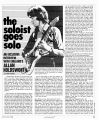 Page 1: "The Soloist Goes Solo" – Exclusive interview with Allan Holdsworth by Kirk Austin
-
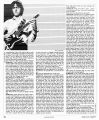 Page 2: Holdsworth on U.K., Bruford, and his new trio project
-
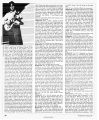 Page 3: Holdsworth on amplifiers, gear, and technique


